
What gapping is, how it works, and clear examples with a quick quiz.
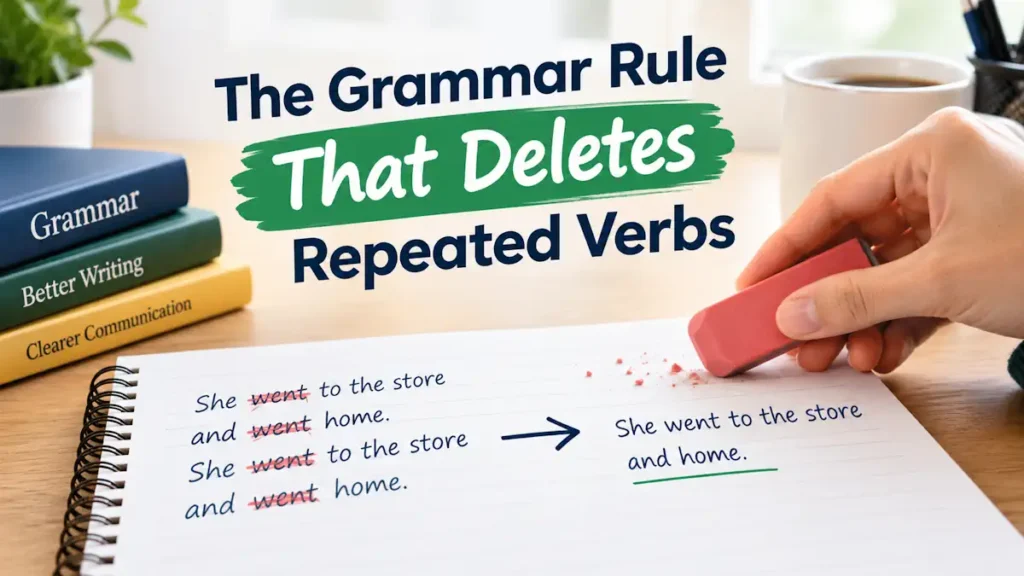
Ever noticed how we drop a repeated verb to keep a sentence from sounding clunky? Instead of saying “Ali ordered tea, and Sara ordered coffee,” we simply say “Ali ordered tea, and Sara coffee.” The grammar rule that lets us delete that repeated verb is called gapping. This short guide explains what gapping is, how it differs from the related rule of VP-ellipsis, and how to use both correctly, with plenty of examples.
Quick Answer:
The rule is called gapping. It deletes a repeated verb (and sometimes more) from the second clause when two clauses are joined, usually by and: “I drink tea, and she coffee” (the verb “drinks” is gapped).
What Is Gapping?
Gapping is a type of ellipsis, the general practice of leaving out words that the reader can easily fill in from context. In gapping, the main verb is removed from the second (or later) clause because it repeats the verb in the first clause.
Examples of Gapping
✓ Sara ordered coffee, and Tom [ordered] tea.
✓ I play guitar, and she [plays] piano.
✓ Some students studied French; others [studied] Spanish.
The words in [brackets] are understood but not written. The reader fills them in automatically.
Gapping vs. VP-Ellipsis
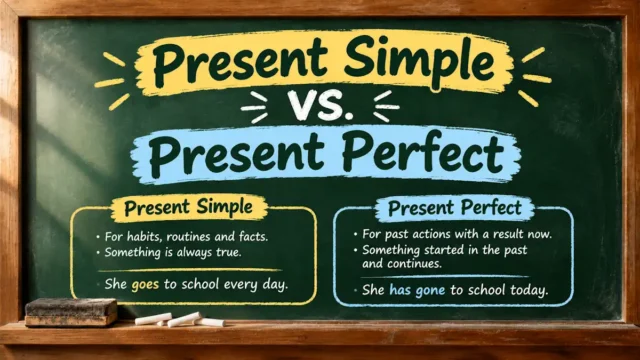
There’s a closely related rule called verb phrase ellipsis (or VP-ellipsis). The difference is simple: gapping deletes the verb entirely, while VP-ellipsis leaves a helping (auxiliary) verb behind.
✓ She can swim, and he can [swim] too.
VP-ellipsis: the auxiliary “can” stays.
✓ I haven’t finished, but they have [finished].
VP-ellipsis: the auxiliary “have” stays.
Quick Comparison
| Rule | What It Deletes | Example |
|---|---|---|
| Gapping | The main verb entirely | I drink tea, and she [drinks] coffee. |
| VP-ellipsis | The verb phrase, keeps an auxiliary | She can swim, and he can [swim] too. |
Key Point: Both gapping and VP-ellipsis are forms of ellipsis: leaving out words that are understood. Gapping drops the verb completely; VP-ellipsis keeps a helping verb like can, have, or will.
Why We Use This Rule
Deleting repeated verbs makes writing and speech cleaner, shorter, and less repetitive. Compare:
✗ Ali plays cricket, and Sara plays hockey, and Tom plays tennis.
Repetitive.
✓ Ali plays cricket, Sara [plays] hockey, and Tom [plays] tennis.
Smooth and natural.
Quick Quiz: Test Yourself
Pick the correct answer. The answer key is at the bottom; no peeking!
Q1. What is the grammar rule that deletes a repeated main verb called?
a) Gapping
b) Tagging
c) Splicing
Q2. In “I like tea, and she ___ coffee,” the gapped verb is:
a) drinks
b) likes
c) wants
Q3. Which rule keeps an auxiliary verb like “can” or “have”?
a) Gapping
b) VP-ellipsis
c) Neither
Q4. Gapping is a type of:
a) punctuation
b) ellipsis
c) tense
Answer Key: 1-a 2-b 3-b 4-b
Frequently Asked Questions
How can I improve my understanding of repetitive language in writing?
Start by learning the tools English gives you to cut repetition, like gapping and VP-ellipsis, which remove repeated verbs. Then read your drafts aloud: wherever the same verb returns in a joined clause, try dropping it (“Mike plays baseball, and Emily [plays] soccer”). Spotting and trimming these patterns makes your writing clearer and more professional.
What are some effective ways to avoid repetitiveness in speech?
Use ellipsis to drop repeated verbs (“I ordered tea, and she [ordered] coffee”), vary your sentence structure, and replace a repeated verb phrase with a short form plus an auxiliary (“She can swim, and he can too”). These small habits keep your speech from sounding repetitive while still being easy to follow.
What is the grammar rule that deletes repetitions of verbs?
It is called gapping. Gapping removes a repeated main verb from the second clause, as in “I ordered tea, and she [ordered] coffee.”
What is the difference between gapping and VP-ellipsis?
Gapping deletes the main verb entirely. VP-ellipsis deletes the verb phrase but keeps a helping verb, such as “She can swim, and he can too.”
Is gapping grammatically correct?
Yes. Gapping is a normal, accepted feature of English that makes sentences shorter and less repetitive. It falls under the broader category of ellipsis.
What is ellipsis in grammar?
Ellipsis is leaving out words that are understood from context. Gapping and VP-ellipsis are two specific types that remove repeated verbs.
Gapping drops the repeated verb; VP-ellipsis keeps a helping verb. Both keep your sentences clean.

Benen
My name is Benen, and I am an English teacher from the US and UK. I am passionate about helping people improve their English language skills, including grammar, vocabulary, and sentence structure, while building their confidence in a supportive and patient learning environment.