
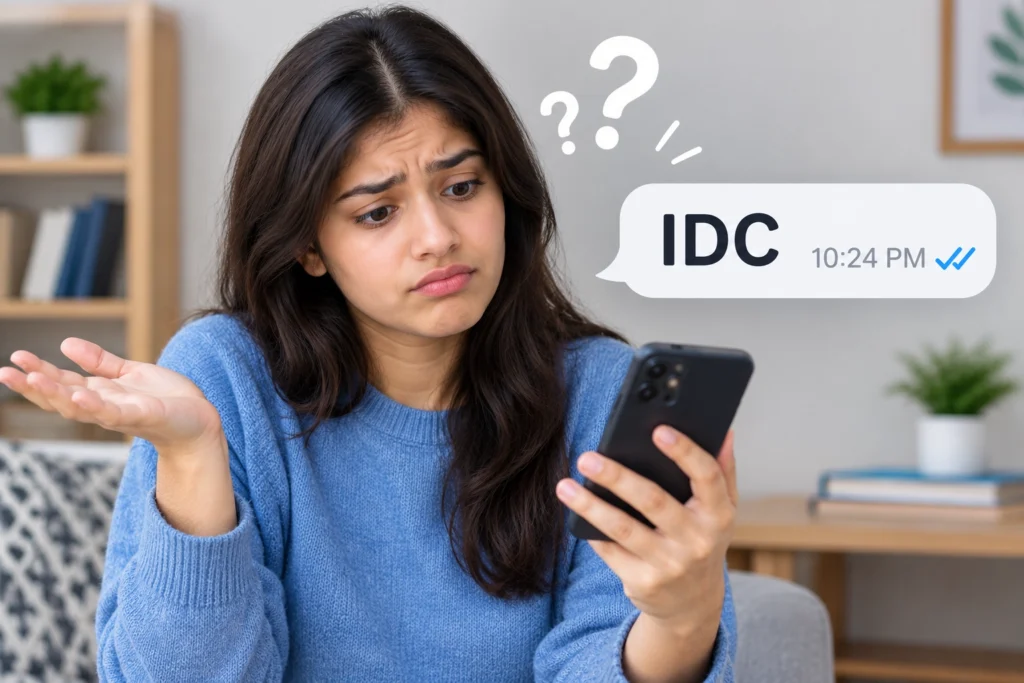
IDC means “I don’t care” in texts, DMs, and comments. It’s roughly like a shrug in written form, sometimes a relaxed “either is fine,” sometimes a cold “not interested.”
A message that just says “IDC” can leave you unsure whether the other person is easygoing or quietly annoyed. The three letters are simple, but the mood behind them changes with the situation. Here’s how to read IDC correctly, where it shows up, and what to send back.
What Does IDC Mean in Text?
In everyday messaging, IDC is a quick way to say that something doesn’t matter to you. People reach for it when they:
- have no strong preference
- aren’t interested in a topic
- feel indifferent about the outcome
- want to drop a subject
- want to stress that someone else’s opinion won’t sway them
Quick example
Friend: “Pizza or burgers tonight?” You: “IDC, you pick.”
Here it simply hands the decision to the other person. Nothing negative is intended.
| Term | Full Form | Typical Tone |
|---|---|---|
| IDC | I don’t care | Relaxed, blunt, playful, or cold |
| Category | Internet slang / texting shorthand | Informal only |
Where IDC Comes From
IDC belongs to the wave of shorthand that grew alongside SMS texting, chat rooms, and early instant messaging in the late 1990s and early 2000s. Character limits and slow phone keypads pushed people to shrink common phrases, and short forms like LOL, BRB, and OMG spread quickly. IDC joined them because “I don’t care” is something people say all the time, and three letters are far faster to type than three words.
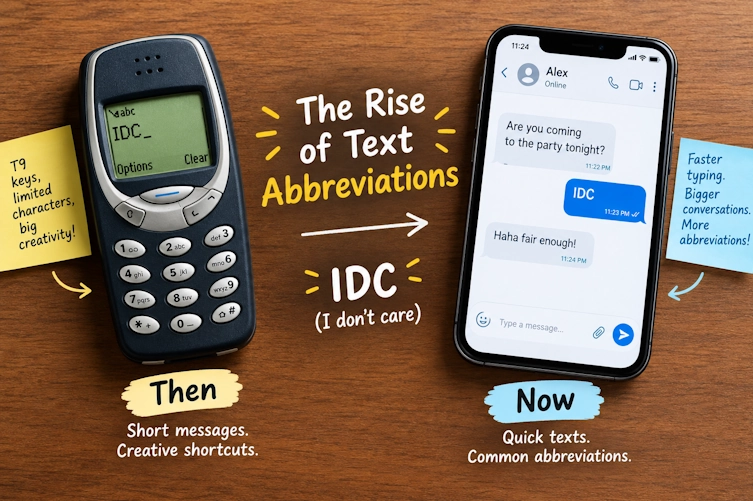
Today it is still one of the most widely recognized abbreviations, and most people understand it without any explanation.
How Tone Changes What IDC Means
The letters never change, but the impact does. Think of it in three broad moods.
| Mood | What It Sounds Like | Example |
|---|---|---|
| Neutral | No preference, happy either way | “IDC where we eat.” |
| Dismissive | Uninterested, possibly rude | “IDC what you think.” |
| Emotional | Tired, hurt, or checked out | “IDC anymore.” |
Neutral: Common when picking food, movies, or plans. The speaker is being easygoing.
Dismissive: If someone shares something they worked hard on and the reply is just “IDC,” that lands as cold and disrespectful.
Emotional: A phrase like “IDC anymore” often signals frustration or emotional distance rather than a lack of preference. If someone keeps repeating it during a tense conversation, they may be overwhelmed or trying to avoid a deeper talk.
Context is the deciding factor. Look at what came before the message, and whether an emoji, a joke, or a softer follow-up came with it.
IDC on WhatsApp, Instagram, TikTok, and Snapchat
The meaning stays the same across apps, but each platform has its own flavor.
WhatsApp: Mostly used in personal and group chats for quick, low-stakes answers, like “IDC where we meet.”
Instagram: Shows up in DMs and comments. In captions it often signals confidence, as in someone saying they don’t worry about what others think.
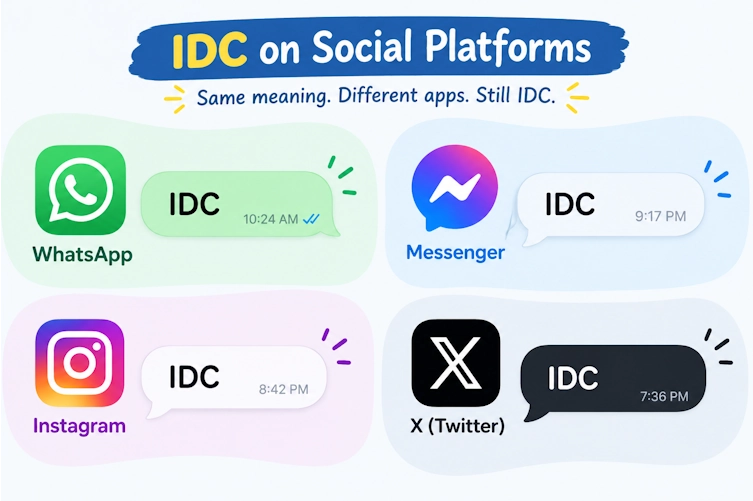
TikTok: Common in comments and video captions, often tied to jokes, trends, or bold opinions.
Snapchat: Usually light and fast between close friends, often paired with an emoji that softens the message.
Real Chat Examples
- “Sushi or tacos?” / “IDC 😂”
- “Pick a time, IDC.”
- “IDC what movie we watch 😊”
- “Everyone’s arguing and IDC anymore 🤔”
- “IDC about spoilers 😂”
- “You can invite whoever you want, IDC.”
- “IDC if it’s raining, let’s go.”
- “IDC, I’m just here for the snacks 😂”
Notice how the ones with emojis or a cheerful follow-up feel friendly, while the ones with no softening can feel sharper.
IDC vs. Similar Slang
| Term | Meaning | Best Used For |
|---|---|---|
| IDC | I don’t care | Showing indifference or no preference |
| IDK | I don’t know | Admitting you lack information |
| NVM | Never mind | Dropping a topic |
| IMO | In my opinion | Sharing a viewpoint |
| IDC tbh | I don’t care, to be honest | Softer, more casual indifference |
| IDC anymore | I no longer care | Signaling frustration or detachment |
| Meh | Unimpressed | Casual, mild disinterest |
| Up to you | You decide | Friendly, polite handoff |
The most common mix-up is between IDC and IDK. One is about caring, the other is about knowing.
Other Meanings of IDC
Most of the time IDC means “I don’t care,” but the letters appear in other fields too.
| Field | Possible Meaning |
|---|---|
| Texting | I don’t care |
| Business | The initials of a global market research and advisory firm |
| Technology | Internet Database Connector |
Because these meanings live in very different spaces, the surrounding text usually makes the intended one obvious. A report about market forecasts is not talking about indifference.
Who Uses IDC, and Do Age Groups Read It Differently?
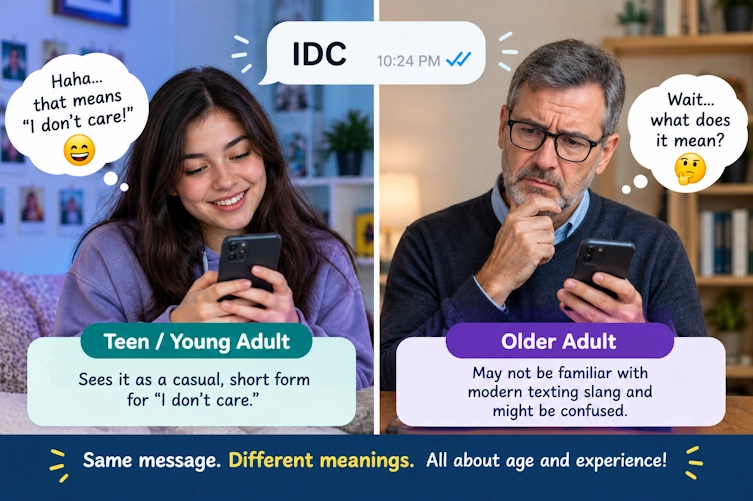
Teenagers and young adults use it constantly and treat it as normal. Gamers, students, and heavy social media users are also frequent users. Older readers who are less used to internet shorthand may read IDC as blunt or even rude, even when a younger sender meant it casually. If you’re not sure how your audience will take it, spell the sentence out instead.
Is IDC Rude?
It depends entirely on how and where it is used.
- Not rude: “IDC, you choose.” This is a flexible, friendly reply.
- Possibly rude: “IDC what you think.” This dismisses the other person’s view.
- Hurtful: Replying “IDC” to someone sharing something personal or important.
A good rule is to ask whether the other person needs your care in that moment. If they do, skip the abbreviation.
Common Mistakes With IDC
Assuming it is always rude. Plenty of people use it purely to say they’re easy to please.
Assuming it always means anger. Some senders are just relaxed or joking.
Ignoring the conversation around it. The same message can be neutral in one thread and cutting in another.
Overusing it. Repeating IDC over and over can make you seem cold or checked out, even if that isn’t how you feel.
Using it in serious talks. In emotional or professional moments, it can hurt or confuse the reader.
When to Use IDC (and When Not To)
Good moments to use it:
- casual chats with friends
- when you truly have no preference
- quick, informal replies
Better to avoid it in:
- work emails and professional messages
- serious or emotional conversations
- situations where someone is asking for your real opinion
For polite alternatives, try “I have no preference,” “Either works for me,” or “I’m happy with whatever you choose.”
How to Reply When Someone Sends IDC
Your reply should match the mood.
Casual and friendly:
- “Okay, I’ll choose.”
- “Sounds good, no worries.”
Playful:
- “Perfect, decision powers unlocked! 😂”
- “Then I’m picking pizza.”
When it seems emotional or cold:
- “Hey, is everything okay?”
- “That sounded a bit sharp, do you want to talk about it?”
Formal:
- “Understood, I’ll go ahead and decide.”
If the message feels casual, just move the plan forward. If it feels heavy, a gentle follow-up question usually clears things up faster than guessing.
Is IDC Still Popular?
Yes. It is quick to type, works on every messaging app, and is understood by almost everyone online. New slang appears constantly, but IDC has stayed in regular use because it is simple and flexible enough to fit many moods.
Quick Facts
| Factor | Details |
|---|---|
| Meaning | I don’t care |
| Category | Internet slang and texting shorthand |
| Tone | Neutral, casual, dismissive, humorous, or emotional |
| Common places | Text messages, DMs, comments, group chats |
| Formality | Informal |
Conclusion
IDC means “I don’t care,” but how it feels depends on tone, timing, and who is talking. A relaxed “IDC, you pick” is just friendly flexibility, while a flat “IDC” in the middle of a serious talk can sting. Read the context before reacting, and choose clearer wording when the moment matters.
FAQs
What does IDC mean on Snapchat? It nearly always means “I don’t care.” On Snapchat it is usually casual and playful, often with an emoji that keeps the mood light.
What does IDC mean on Instagram? It also means “I don’t care,” and in captions or comments it often expresses confidence or independence from other people’s opinions.
Is IDC rude? Sometimes. “IDC where we eat” is harmless, while “IDC what you think” can sound dismissive. Tone and situation decide.
What does IDC mean from a girl or a guy? The meaning is the same from anyone: “I don’t care.” What changes is the mood behind it, so check the context and tone rather than who sent it.
What is the difference between IDC and IDK? IDC means “I don’t care,” while IDK means “I don’t know.” One is about interest, the other about knowledge.
Can IDC be sarcastic? Yes. People sometimes use it jokingly or with exaggeration, especially with emojis, to show playful indifference.
Can IDC mean something other than “I don’t care”? Outside of texting, it can refer to other things, such as a market research firm or a technical term. In chats, though, it almost always means “I don’t care.”
Should I use IDC in professional emails? No. It is informal slang. Phrases like “I have no preference” sound more polished and respectful at work.

Mona
Mona is a CELTA-certified English teacher and fluency coach who is passionate about helping learners speak natural, confident English. On Grammar Readers, she shares clear explanations of word meanings, idioms, and everyday expressions, so you can understand English the way native speakers use it. Her lessons focus on practical fluency tips that you can apply in daily conversations.